

In my twenty-eight years as a middle school counselor in Hilo, I handed teenagers a lot of motivational books. Most came back with a clean spine and a polite nod. You Are Awesome by Matthew Syed is one of the few that came back with a bent corner and a question. I read it first, then gave it to my grandson Kai, 15, and to the book circle kids who meet at our public library on Saturday mornings. That is the test I trust. Not whether a book sounds good in a catalog, but whether a fifteen-year-old who would rather be on his phone picks it up without being told twice. This is the honest review I would give a parent in the school parking lot, including the parts a publisher would leave out.
The short answer is that this is a useful book for the right reader and a frustrating one for the wrong reader. It is 160 pages, illustrated, published by Sourcebooks Explore, with a reading age of 9 to 12 and a grade level of 4 to 6. That label matters more than most reviews admit. A ten-year-old and a seventeen-year-old are not the same customer, even though both can take something from the ideas inside. What follows is where it worked, where it fell flat, what I tried first that did not work at all, and who should skip it entirely.
The Quick Verdict
A warm, practical growth mindset book for tweens and early teens, but it is a nudge, not a fix, and older teens may find the tone young.
Amazon Check Today's Price →The Right Reader Gets More From This Book Than a Lecture
If you know a ten to fourteen year old who needs a calm start, this is a low pressure way to begin. Read the sample page with them before you decide.
Amazon Check Today's Price on Amazon →How I've Used It
I read the book in two sittings on my lanai, pencil in hand, across one weekend. I wanted to see what a teenager would actually meet on the page, not what a catalog description promised. The book moves quickly, and the illustrated spreads break up the text so the eye has somewhere to rest. I marked the places where the tone felt aimed at a younger reader, because that is the part parents need to know about before they buy.
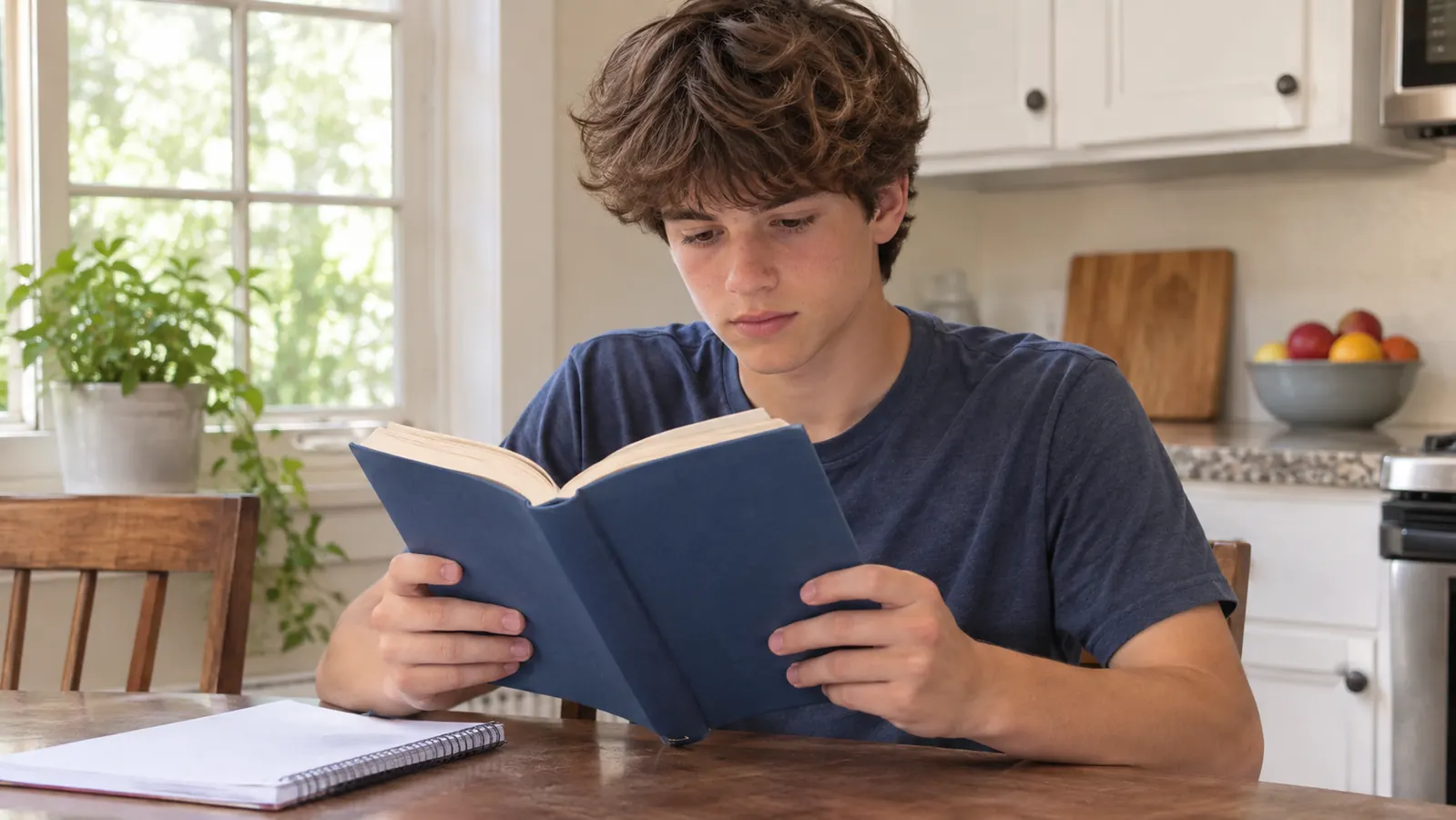
Kai is fifteen, a high school sophomore, and plays volleyball. He is not a kid who asks for self-help books and he would rather be on his phone than reading almost anything. So I did not hand it to him. I left You Are Awesome on the kitchen table next to the car keys and said nothing at all. Two days later, while he was waiting for me to find my shoes, he asked whether the section on practice applied to serving. That is a small win, but it is a real one. He read about half of it before he set it down, and he has picked it back up twice since, both times on his own, once after a rough practice and once on a quiet Sunday afternoon.
At the book circle I took a different approach, because a group is a different audience than one boy at a kitchen table. I put You Are Awesome on the table with four other books and let the kids choose. Six showed up that Saturday, ages thirteen to eighteen. Two finished it. One read the first thirty pages and said it felt like a school assembly. Three did not get past the cover, which is normal and not a verdict on the book. The interesting part came afterward, when the two who finished spent twenty minutes arguing about whether telling yourself you can improve actually changes anything or just makes you feel better about losing.
The following Saturday I brought it back to the group to see whether the argument had shifted anyone. Two of the three who had not opened it asked to borrow it, which is the opposite of what I expected and a reminder that teens are influenced by other teens far more than by adults. One of those two returned it a week later and said the middle was the only part worth reading and the front felt like a pep talk. Another read it twice and asked me for something on the same subject. Same book, same table, six different verdicts. That spread is the most useful thing I can tell you about it.
What I tried first failed, and it is worth telling you because it is probably what you will try. About a week in, I asked Kai to read a chapter and tell me one thing he disagreed with. I framed it as small, twenty minutes, no writing required. He read the chapter, said it was fine, and gave me a one-line answer that told me he had skimmed it. The assignment turned the book into homework, and homework is the one thing a fifteen-year-old will resist on principle. The second attempt, which was simply leaving it where he could find it and letting him bring it up, worked better.
What the Book Does Well
Matthew Syed writes to the reader, not at the reader. The tone is encouraging without being sugary. He makes the case that ability is not a fixed thing, which is the heart of the growth mindset idea, and he does it in plain language a young reader can follow without a psychology degree. That sounds basic. A lot of books in this category lose the kid on page ten, and this one does not.
The physical book matters more than people expect. It is 160 pages, illustrated, 6.25 by 0.65 by 8.75 inches, and it weighs 1.1 pounds. That means it fits in a backpack next to a binder without adding much weight, and it does not look like a textbook, which is the single biggest reason a teen will open it in the first place. I have watched kids judge a book by its thickness in about four seconds. This one passes that test.
The ideas are practical. It gives a teen words for the difference between not yet and not ever. It does not promise that effort always produces a trophy, and I appreciate that restraint. It makes the case that practice and feedback are skills you can build rather than gifts you either have or lack. For a kid who is used to judging himself by a scoreboard, that is a useful shift in how he reads a bad night.
The best part for my purposes is that it starts conversations. On a Tuesday in March, Kai came home from practice frustrated about his serve, and instead of the usual shrug he said something close to what the book says about practice being specific rather than repetitive. We talked for ten minutes at the counter about why his serve falls apart when he is nervous, and he decided, on his own, to serve twenty times before practice instead of hitting balls for fun. He kept that up for about two weeks and then stopped, which is what fifteen-year-olds do. The book was not the reason he improved. The book was the door he walked through, and doors matter.
What Nobody Tells You About the Reading Age Label
The publisher lists reading age 9 to 12 and grade level 4 to 6. Many parents ignore that and buy it for a fifteen-year-old because the title sounds older. Then they are surprised when the teenager rolls their eyes. The label is not a mistake. It is a signal. The book is written for a reader who is still young enough to accept a cheerful voice and old enough to start thinking about effort.
A thirteen or fourteen-year-old can still get a lot from it if they are open. Kai is fifteen and found pieces that stuck. But he also said some of it felt like advice from a coach who did not know him, which is fair. That is the honest middle ground. The book is not too young for every teen. It is too young for some teens, and the adult in the room has to make that call. My rule of thumb after twenty-eight years: ninth grade and below, buy it. Eleventh grade and up, buy it only if the teen already reads this kind of thing or asks for it.
The interactive sections are the other thing nobody warns you about. They only work if the reader actually engages, and a teen who feels assigned to the book will treat those pages like a worksheet. I watched this happen with my own test. My first attempt, the chapter assignment, produced a one-sentence answer I could have written myself. My second attempt, no assignment at all, produced a real question about serving. Same book, same boy, two weeks apart. The difference was not the content. It was the pressure around the content.
One more thing about the label. Because the reading age sits at 9 to 12, this book also works as a read-aloud with a younger child, and it holds up that way. I have recommended it to parents of ten and eleven-year-olds who wanted something to read a chapter at a time before bed, and the response has been good. The pacing suits one chapter a night without a negotiation. A parent reading it aloud gets the same benefit as a teen reading alone, which is that the ideas come back up later in ordinary conversation rather than in a scheduled talk.
Where It Stumbles
The first stumble is the tone. Matthew Syed is warm and direct, but the warmth can read as young to a sixteen or seventeen-year-old. If your teen already reads adult nonfiction or listens to long-form interviews, this will feel like a step backward. That is not a flaw in the writing. It is a mismatch between the book and the reader.
The second stumble is the promise gap. The word uplifting can make a parent hope for a transformation. A book cannot make a teen care about school, go to bed earlier, or stop comparing himself to strangers online. It can give him a frame for the week he just had. It cannot do the work for him, and any review that suggests otherwise is selling something.
The third stumble is fit. The book is general. It is not written for a kid with clinical anxiety, depression, or a learning difference, and it is not a substitute for a counselor or a doctor. I say that as a retired counselor who has sat in a great many meetings where a book was offered instead of an appointment. If a teen is in real distress, get him real support first. A book can sit alongside that support. It cannot replace it.
The fourth stumble is the interactive pages again. Some kids love a book that asks them to stop and think. Others feel put on the spot. If your teen is the second kind, read it yourself first and pull one idea out for a conversation in the car. Do not force the whole experience page by page.
And the fifth is the one parents find hardest to hear. A book given at the wrong moment can do damage. I have watched a well-meaning adult hand a book about confidence to a kid who had just failed something public, and the kid read it as a verdict: you need fixing. Timing is not a detail. Hand it over during a calm week, not in the middle of a bad one, and then leave the room so the kid can decide what to do with it.
What I Liked
- Warm, plain language that does not talk down to the reader
- 160 pages and illustrated, so it feels finishable
- Gives teens useful words for effort, feedback and practice
- Works well as a shared read between an adult and a young teen
Where It Falls Short
- Reading age 9 to 12 skews young for many teens over 15
- Interactive sections can feel like schoolwork if assigned
- No quick change in a teen who is not open to the idea
- Not a substitute for professional support or a real conversation
The book did not turn Kai into a reader. It gave him a few lines he could use before volleyball practice, and that was enough to keep it on his shelf.

Who This Is For
This book is for the parent, grandparent, teacher, or mentor of a ten to fourteen-year-old who needs a gentle start. It is for the teen who already likes to read and wants a book that says he is not finished yet. It is for a book circle that needs a short, discussable title that six kids can get through in a week. It is for the school counselor who wants a shelf book a kid can borrow without a lecture attached. Matthew Syed's book works best when the adult reads it too, so the ideas can come up in the car or at the kitchen table without anyone announcing a lesson.
Who Should Skip It
Skip it if you are buying for a sixteen to eighteen-year-old who already reads adult self-help and will find the tone young. Skip it if you want a book that will fix a teen who refuses to read, because no book does that. Skip it if you are looking for clinical advice, a study plan, or a guarantee about grades, college, or a roster spot. Skip it if you plan to hand it over with a speech about potential. The book is a nudge. If the teen is not open, the nudge lands on the floor and everyone feels worse for the attempt.
How to Use It With a Teen Who Does Not Want to Read
Do not assign it. Leave it out where it can be found. Read one page yourself and mention one line that made you think, in the most casual voice you own. Ask a question that has no grade attached to it. Let the teen disagree, and mean it when you say disagreement is allowed. If the answer is that the book is cheesy, that is still a conversation. You can ask which part felt cheesy and which part, if any, felt true.
With Kai, the opening was volleyball, not the book. I mentioned that the author talks about practice and confidence. He asked whether it said anything useful for serving. That was enough. We read two pages together at the counter and he did the rest on his own schedule. If I had made it a summer assignment, he would have found something else to do, and the book would have joined the stack of things adults told him to read.
For a book circle, use it as a short read rather than a full unit. Six to eight kids is plenty. Let them pick one idea and argue with it for twenty minutes. The value is in the argument, not in finishing every page, and the kids who did not finish will still have an opinion by the end of the hour because they heard the others. A book that starts a real conversation has done its job, even if half the group only read the first thirty pages.
A Note on Outcomes
I have watched enough teenagers to know that no book changes a life in 160 pages. The change comes from practice, sleep, a coach who sees them, a parent who listens, and a kid who decides to try again on a Wednesday when nobody is watching. A book can be one small part of that. You Are Awesome is a good small part for the right reader, and a waste of shelf space for the wrong one.
That is why I will not promise grades, college admissions, or a spot on the team. I will promise a readable book with a useful message and a tone that most ten to fourteen-year-olds can take. If that is what you need, this is a solid choice. If you need a guarantee, no book can give it to you, and you should be suspicious of any that claims otherwise.
Buy It for the Kid Who Needs a Nudge, Not a Lecture
If the reading age fits and the teen is open, this is a useful book to keep on the shelf. If not, save it for a younger reader and have the conversation instead.
Amazon Check Today's Price on Amazon →