

Kai was fifteen and he had already told me twice that he did not need a book to explain his own life to him. He had a phone for that. So I did what any retired school counselor does when a teenager is that certain about something. I set the book on his dresser and said nothing more about it. Three weeks later, in the middle of a volleyball tournament, he asked me why nobody had ever told him that the first habit was really about choosing your own mood. That question is the reason I keep a stack of The 7 Habits of Highly Effective Teens in my hall closet and hand them out like tissues.
I spent twenty eight years as a middle school counselor in public schools, and in that time I watched a great many well meaning books about grit and mindset get skimmed for one chapter and then used as a coaster. This one behaves differently, mainly because Sean Covey writes to teenagers instead of about them. The updated edition runs 288 pages, published by Simon and Schuster, and it is aimed at readers twelve to seventeen, which is grades seven through nine. That is younger than a lot of parents expect when they buy it for a high school senior.
The Quick Verdict
The rare motivation book a teenager will finish on his own, and the one I have watched start the most real conversations. Best for ages twelve to sixteen. Seventeen and eighteen year olds may find the cartoons young.
Amazon Check Today's Price →The book my grandson finished without being asked twice
A 288 page paperback written for readers twelve to seventeen, in an updated edition that knows what a group chat can do to a normal Tuesday. See today's price and the current edition on Amazon.
Amazon Check Today's Price on Amazon →How I've Used It
My method has not changed in years. I read a book myself first, all of it, because I will not hand a teenager something I have only skimmed. Then it goes to Kai. Then, if he does not throw it across the room, it goes to the book circle I run on Saturday mornings at the public library here in Hilo, usually six to eight kids between thirteen and eighteen.
That order matters. Kai is fifteen and would rather be on his phone than reading, so he is an honest filter for whether a book can hold a reluctant reader. The book circle is the harder test, because those kids will say out loud, in front of each other, that a chapter was boring. Nothing survives that room by accident.
With this one I did something extra. I did not assign it. I put three copies on the table and let them pick it up or not. Six of the eight took one home the first week. The two who did not were the oldest in the group, seventeen and eighteen, and their reason was consistent. It looked like a book for younger kids. That reaction is worth knowing before you buy it for an older teenager.
What's Actually Inside the Updated Edition
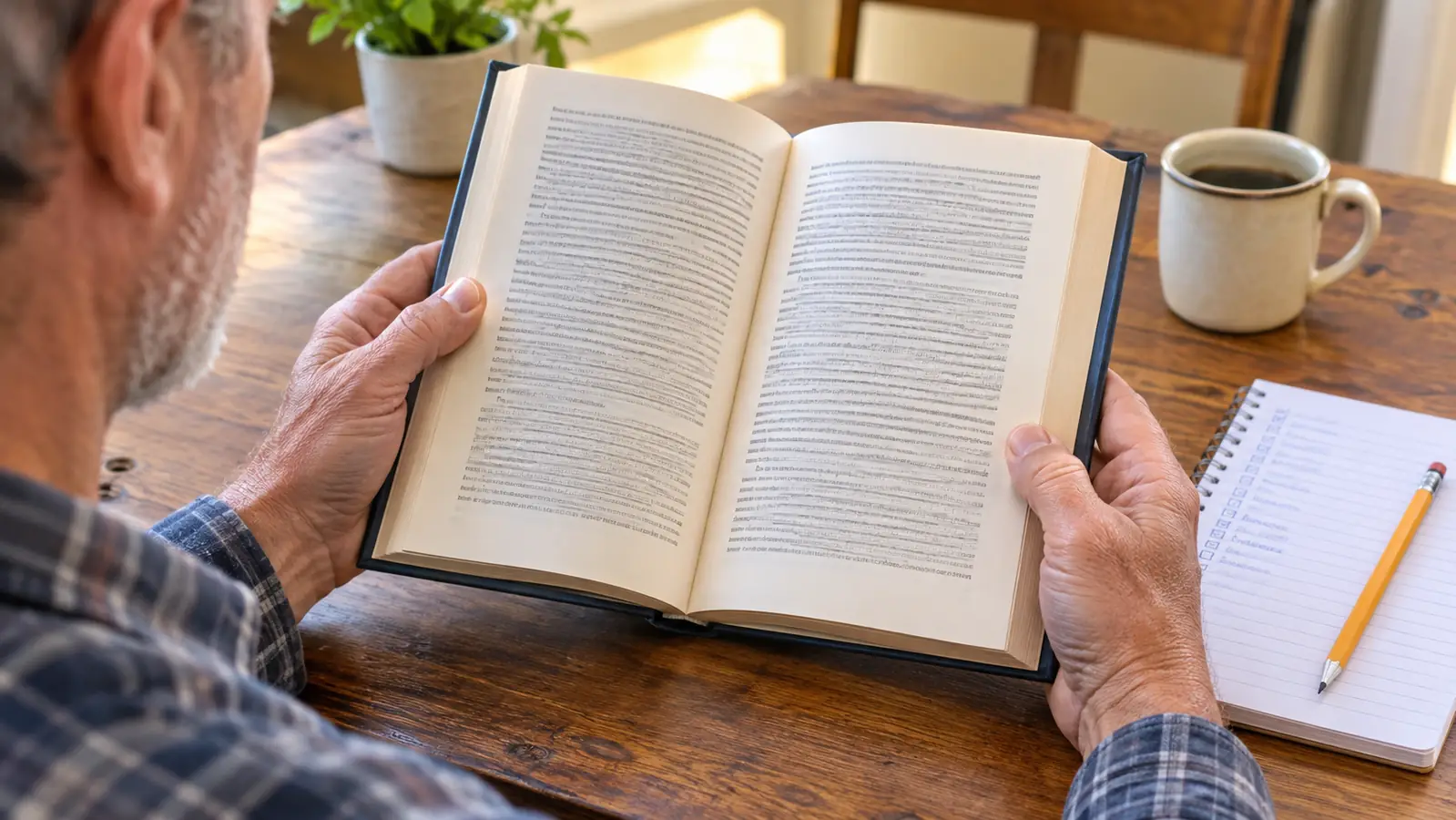
The structure is seven habits, one per section, and each section is broken into chapters short enough to finish on a bus ride. They are be proactive, begin with the end in mind, put first things first, think win-win, seek first to understand then to be understood, synergize, and sharpen the saw. If that list sounds familiar, it is the adult version, translated into language a thirteen year old can use without rolling his eyes.
What makes it readable is the furniture around the ideas: cartoons, short lists, quotes sent in by actual teenagers, and small exercises that take five minutes rather than an evening. Sean Covey writes in short sentences and does not lecture. The reading level sits comfortably at the younger end of the stated range, roughly grade seven, so a fourteen year old who reads slowly will not feel embarrassed by the page in front of him.
The physical object matters more than parents expect. This edition is 6.13 by 9.13 inches and 2.31 pounds, big enough that the cartoons and the pull quotes have room to breathe, heavy enough that I noticed it in my tote bag on the walk from the parking lot to the library. It slides into a backpack next to a binder without argument. It does not slide into a hoodie pocket. Three of the kids in the circle carry theirs loose, no cover, spines bent all the way back, and the binding has held on every one so far, which says something about a paperback that gets treated like a textbook by kids who do not treat textbooks well.
The updated edition also addresses what the original could not. Phones, social media, the way a group chat can turn a normal Tuesday into a crisis. I noticed the book circle kids bringing up those passages more than any other part, probably because it was the one place where the book seemed to know what their day actually feels like.
What Teens Take Away That Parents Don't Expect
Parents usually buy this hoping for better grades or fewer arguments about homework. That is not what I watch happen. The change I see most often is smaller and more useful. A teenager starts noticing the difference between what happened to him and what he decided to do about it. That is the first habit, and it is the one Kai raised at the volleyball tournament, in a gym, out of nowhere, three weeks after I stopped mentioning the book.
The second thing that lands is the win-win idea, and it lands hardest with kids who have siblings. I watched two brothers in the book circle argue about a video game for ten minutes and then, without any prompting from me, restate the argument as what each of them actually wanted. Neither had read that far on purpose. It had simply stuck, the way a song lyric sticks.
The third is the planning material. Begin with the end in mind sounds like a poster until a kid uses it on a class schedule, and then it stops being a poster forever. Several of the book circle kids used the goal pages to map out a semester on paper. Not one of them described it as doing homework about homework, which is what I had braced for.
The clearest example came on a Saturday in March, a week before spring break. One of the book circle kids had been putting off a summer job application for six weeks. She had the form. She had the names of two teachers willing to vouch for her. She had everything except pages on paper. We spent fifteen minutes with the begin with the end in mind exercise and she wrote three lines about what she wanted the person reading that form to think of her. Then she filled the form out that night and turned it in on the Monday. That is not a life transformation. It is one application, six weeks late, finished by the kid herself, and I will take it.
Where It Slows Down
The middle is the weak part. Once the novelty of the cartoons wears off, the sections on priorities and relationship accounts run longer than they need to, and I had two kids stall there in the same week. I started telling new readers to read the first three habits, skip ahead to the win-win section, and circle back. Nobody has complained about that advice yet.
I can tell you almost exactly where it happens. The put first things first section runs roughly four times as long as the point it is making, and the material after think win-win is the same. In the same week in February, two kids in the circle stopped in the middle of that stretch and did not pick the book back up. Both told me, separately, that it had started to feel like a workbook. I do not think they were wrong. The exercises are good and there are simply too many of them in a row, so the book asks a teenager to do the same thing four times when twice would have carried the idea. My shortcut has held up with everyone I have given it to since.
Some references are already aging. Sean Covey updated the book, but any title that names a specific app or platform will read as slightly stale to a fifteen year old who has never used it. The dated parts are easy to spot and easy to skim, and the ideas underneath them have not gone off.
The bigger limit is the one parents should hear clearly. To a seventeen or eighteen year old, the cartoons and the young voice can feel like being talked down to. My older book circle kids said this directly, without softening it. If your teenager is at the top of the age range and prickly about being addressed as a kid, this is a book you hand over with a sentence of framing, not one you drop on a desk and walk away from.

What a Year of Watching Looked Like
I have now watched this book move through the same small group for a year, plus two copies that have been passed between Kai's friends with no involvement from me at all. The pattern was hard to miss. The kids who got something out of it were the ones who talked about it, with me or with each other. The ones who read it silently and closed it got roughly what anyone gets from reading anything silently, which is a pleasant afternoon and not much after.
A year gave me a timeline I trust more than a first impression. The first read happens fast, usually inside a week, because the chapters are short and the cartoons pull a kid forward through a page he meant to skim. The second read is the one that matters, and it only happens if somebody asks a question. Kai went back into it on his own in April, straight to the sharpen the saw section, because volleyball season had wrecked his sleep and he remembered there was a page about that. Two of the book circle kids reread the win-win chapter before a family argument they could see coming. The rest read it once, said it was good, and moved on, which is an ordinary and acceptable outcome.
Two of the copies I set on that table in the fall never came back to me. One went from Kai to a teammate, who handed it to somebody on the bus, and it surfaced at my house in June with a cracked spine, a bent back corner and a phone number written inside the back cover by a kid I have never met. That is a better review than anything I can write here. The other copy is still out there as far as I know, and I have stopped asking about it.
That is the honest finding, and it is not the book's fault. A book is a nudge, not a repair. It cannot make a teenager care, cannot replace a parent in the car after practice, and cannot turn a kid who is struggling for reasons outside his control into a kid who is not. What it can do is hand a teenager vocabulary for something he is already feeling, at a reading level he is not embarrassed by, in a few hours on a Saturday.
What I Liked
- Written to teenagers rather than about them, so phone obsessed kids who normally refuse books will actually read it
- 288 pages split into chapters short enough to finish between practices
- The updated edition speaks directly to social media and phones, which is the part teens bring up on their own
- The seven habits give parents and teens shared words for an argument, which lowers the volume in the car
- Exercises take minutes, so a teenager can finish what he starts
- The binding survives being carried loose in a backpack with a bent-back spine
Where It Falls Short
- The cartoons and young voice can feel condescending to seventeen and eighteen year olds
- The middle sections on priorities and relationships run long and lose momentum
- A few platform references are already dated
- It changes very little for a teen who reads it silently and never discusses it
- No list of habits replaces an adult who will talk after practice
Six of the eight kids in my Saturday book circle took a copy home. Five finished it. That is a better completion rate than anything else I have put in front of them in three years.
Who This Is For
This fits a young teenager, roughly twelve to sixteen, who is starting to notice that his days run him instead of the other way around. It fits a parent or grandparent who wants shared vocabulary for the twenty minute drive home from practice. It fits teachers and mentors who need a discussion text that will not lose the room, and it fits a kid who is willing to read a short chapter and then say what he thought about it.
It also fits the teenager buying it for himself, which happens more than parents expect. Two of the book circle kids found it on their own before I ever brought it in. If a fifteen year old is asking how to get his week under control, this is a reasonable first answer at a reading level he will not resent, and it asks less of him than one practice of the sport he already plays.
Who Should Skip It
Skip it if your teenager is seventeen or eighteen and allergic to being addressed as a kid. The voice is deliberately young and it will rub some older readers the wrong way, which is fine and not a defect. Skip it if you want a book that does the work by itself, because this one needs a conversation to land. If the conversation is not going to happen, save the paperback and take him for a drive instead.
And skip it if the plan is to hand it over as a substitute for being involved. Sean Covey supplies tools. He cannot supply the adult. A kid struggling with something bigger than organization and motivation needs a person rather than a book, and no list of habits changes that, no matter how well written it is.
One paperback, one Saturday, and a question you did not have to ask
The version I hand out is the updated edition from Simon and Schuster, 288 pages, written for readers twelve to seventeen. If your teenager is going to read one book about getting his own week under control, this is the one I have watched work.
Amazon Check Today's Price on Amazon →